


For citation, please use:
Rozès, S. and Rutkevich, N.A., 2026. Europe’s Historical Spirit and Collective Imagination. Russia in Global Affairs, 24(2), pp. 48–60. DOI: 10.31278/1810-6374-2026-24-2-48-60
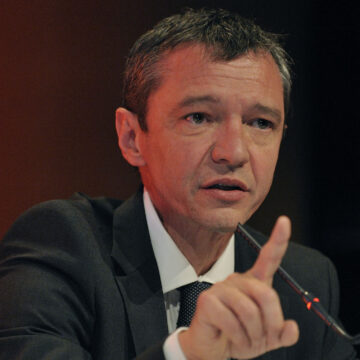
Stéphane Rozès, former Director General of the CSA Research Institute (1991-2009), taught at Sciences Po Paris (1990-2023) and HEC (2008-2011); worked as a columnist for France Inter, LCP-Assemblée nationale, Public Sénat, BFM Business, and France Culture. Currently, he teaches at the Catholic University of Paris and collaborates with a number of magazines (Le Débat, Commentaire, Études, Revue de la Défense nationale, Revue politique et parlementaire), participates in Nouvelle Revue Politique’s editorial project, and is an honorary member of CEPS (Center for European Policy Studies). He is talking with Natalia Rutkevich, PhD, journalist, whose book “In Search of the Lost Republic” was published by Praxis Publishing House in 2020.
– The title of your latest book Chaos. An Essay on the Collective Imagination of Nations (Chaos. Essai sur les imaginaires des peoples, 2022) describing the political processes in France in the context of global developments, sounds exclusively relevant. Chaos is the most appropriate definition of what has been happening in recent years. What do you think are the main reasons for that?
– Chaos that has engulfed the contemporary world was caused—for the first time in history—by globalization carried out not through domination of a human community, a city-state, or an empire driven by ideas and clearly defined interests that generate partnerships or, conversely, religious or political confrontation, but by faceless forces—markets and technologies controlled by the transnational neoliberal regime. Today’s economic, financial, and digital globalization is independent of the global integration of civilizations and nations which have varying collective imaginations, i.e., the way they perceive reality and act in it.
Every civilization and every nation has a stable collective imagination that embodies its understanding of goodness, justice, and efficiency. It also includes religious and political beliefs and institutions, as well as various social, technical, and geopolitical relationships through which nations and civilizations adapt to reality. History is driven not by the power of ideas or material factors but by the dialectics between a stable collective imagination and a changing reality. The current chaos is a direct consequence of the destabilization of nations and civilizations’ collective imagination by neoliberal globalization.
Financial capitalism and technological revolutions have spread across the world, including China and the former Eastern bloc countries. These developments have shifted governance from national governments to transnational institutions and mechanisms, relieving the ruling elites of the need to explain to the people that tomorrow may be worse than today.

The loss of control and the estrangement of the state from society cause its fragmentation, self-isolation, and a search for scapegoats. And to regain the sense of integrity, societies engage in economic, geostrategic, and military conflicts with their neighbors. Multilateral policies are giving way to the chaotic policy of force. The world is embittered, and force increasingly overrules law, both in peacetime and in wartime. MAGA Trumpism is not the cause of this rollback but its symptom.
– Is it primarily about the West?
– The West is most vulnerable to neoliberalism. Its Promethean imagination can barely cope with a situation where the course of events is determined by chance and not by Reason or Progress. Other civilizations with unique characteristics, driven by the desire for harmony with nature or compliance with divine law, are far less susceptible to destabilization under extreme uncertainty. They can adapt to the changing circumstances.
The U.S., endowed with messianic imagination and struggling to retain hegemony, seeks to preserve its monetary, industrial, technological, and military advantages, but it is no longer willing to bear the political and strategic costs of leadership. After the fall of the Berlin Wall, the ideological East-West confrontation was replaced by a cultural rift between the West and the Global South that unites Asian, Eurasian, African, Arab-Muslim, and Latin American civilizations. They are united by the desire to find an alternative—they want to modernize, but not westernize, they want to assert universal principles, without appealing to abstract universalism, and they want to defend their political sovereignty.
The Global South no longer sees itself as an object of domination but as an agent offering an alternative. It asserts itself on the international stage and at the United Nations, whether it concerns Ukraine or Gaza, and refuses to follow the Western line. We already see the contours of a different, multipolar order—a precursor of a new architecture of international relations, as explicitly stated by Lula da Silva, Xi Jinping, Vladimir Putin, and Narendra Modi.
Today’s world vacillates between escalating confrontations (including a possible U.S.-China clash in the South China Sea) and a possible transition to a new equilibrium, provided Europe acts as a bridge.
Hybrid wars engulf societies that are not formally involved in conflicts. Instantaneous dissemination of emotions through digital communication globally equalizes conditions and the world’s standards. The conquest of minds is a prerequisite for the conquest of lands; so, public opinion turns into a battlefield. The boundary between civic societies’ external and internal space is getting blurred: information wars penetrate everyday life as cultural and semantic battles. This leads to conscious or unconscious rethinking of concepts: ‘Islamophobia,’ ‘terrorism,’ or ‘genocide’ become a tool of struggle. Diasporas and migrants become both objects of influence and intermediaries for the parties involved in conflicts.
The strength of a nation in both peacetime and wartime depends on the harmony between its collective imagination and its institutions, and on the strength of the bond between the sovereign and the people. A nation’s mobilization and its moral stability in the face of war is determined by how a conflict fits into the collective imagination: whether people perceive the war goals as legitimate, whether they are able to influence the course of events, whether military means match political goals, and, finally—and this is something new—whether current events are properly understood and accepted by the public in other countries.
– Speaking of Europe, what are the roots of its current difficulties?
– Europe has become very weak over the past three decades. It is going through an economic, industrial, and technological downturn and is losing its strategic planning expertise. Notwithstanding its expansion, the EU’s share in global GDP has been steadily declining since the conclusion of the Maastricht Treaty. The EU is internally fragmented and vulnerable to external influences and pressures.
This is because its institutions are at odds with the European collective imagination grounded in concrete universalism. Europe’s genius was in its ability to build the common based on diversity. Since the times of Mare Nostrum—Mediterranean, which was incorporated into the united Roman Empire, Europe drew strength from the ability to borrow and unite.
Even today, every European nation has its own collective imagination. Their multiplicity is the European genius: it generates innumerable ways to create, work, consume, save, operate in the digital space, position oneself on the world stage, and wage war. The dialectics between the particular and the general is a European feature, a concrete universalism that has become the West’s matrix but has also engendered its American messianic version. This logic has been governing the world order since the days of ancient Greece and Rome.
Europe broke off with History: by trying to bypass nations and unite peoples through unified (economic, monetary, budgetary, and trade) procedures, the EU has undermined its very foundation—the peoples who in the course of history have formed nations.
The European states’ separation from nations and adoption of supranational neoliberal governance models, the abandonment of their peoples’ imagination and interests has caused distrust of the ruling elites. Hence the outbreaks of isolationism, resentment, and various forms of populism. This has sapped the national elites’ vitality and uprooted them from history: the leaders have turned into managers void of political and strategic vision.
The peoples of Europe strive for the rehabilitation of politics, the state, the nation, the restoration of sovereign power, social justice, and security. That is why the migration issue takes center stage in Europeans’ expectations: it embodies cultural (compliance with integration models and national norms), economic and social (capital-labor ratio), and crime problems, as well as problem of preserving sovereignty through border control. Faced with common threats—internal and external—the EU is splitting up in search of answers. The contradiction between the ‘federal Europe’ project, touted by Brussels and some national leaders, and the desire for a ‘Europe of nations,’ increasingly voiced by the grassroots, is deepening. If it persists, all talk of European politics’ “federalization” will turn hollow, and the EU itself will be vassalized and eventually vanish from History.
The Franco-German duo, which was the engine of Europe for a long time, has actually gone off the stage: despite the rhetoric and common challenges—debt, pandemic, war in Ukraine—France and Germany have different visions, which becomes particularly obvious when it comes to questions of strategic autonomy, NATO, and the defense industry. France has failed to fulfil its political role, being unable to define it even for itself, and succumbed to the temptation of an illusory technical and economic approach.
– Do you think that the present political chaos in France was caused by more profound factors related to its identity and worldview, and not just by the current circumstances?
– In France, the impact of neoliberal globalization is more acute than in other countries, because its logic and consequences run counter to the very nature of the country. In addition, historically, France thinks of itself as an active world power, but its internal resources have dried up. Its word is still vibrant and forceful, but it has much less support from the nation on issues of external interference, although the country potentially has impressive defenses against external threats.
The French are the most pessimistic people in the OECD. Over the past thirty years, France’s situation has deteriorated in almost all respects. The UN Human Development Index is quite illustrative: France has dropped from second place in 1995 to 26th. The reasons for this decline are cultural and political rather than socio-economic. In France, there is a deep contradiction between national identity—universalist, geared towards the future, and fueled by political debates about the country’s fate—and neoliberal governance which requires immediate and constant adaptation to external economic and legal constraints,
Political distrust has reached its limits. This is revealed not only in an unprecedented rejection of the president by society but also in the feeling of a deep systemic crisis: the Republic’s loss of territories, violence, Islamist terrorist attacks, the collapse of the social and integration model, uncontrolled immigration, economic decline, and paralysis of political institutions.
The budget deficit is just a numerically expressed disbalance between the state administration’s policy aligned with Brussels’s neoliberal directives, and the realities in the country that opposes this policy. The result of this confrontation is the distension of institutions, dysfunctions, regulatory inflation, waste, and the paradox of a state that invests heavily in a social model that is degrading.
According to surveys, two-thirds of French people support the dissolution of parliament, and most back the idea of an early presidential election. Society demands that the president, the government, and the parliament better express the will of the people, and that the state serve the nation, as before, by promoting national sovereignty, the Republic’s values, secularism, and the pursuit of order and social justice. Until that happens, the country will remain divided, distrustful of its leaders, and paralyzed.
The collective imagination of the French people is naturally oriented towards the outside world. According to Andre Malraux, “the French should embrace the whole world,” but today they lack the strength to do so. Until the internal political crisis is resolved and European dysfunctions are eliminated, France, lacking necessary resources, will not be able to act globally on the grand scale it declares. The French fear not so much external instability as an internal rift between how they feel and how they are governed, between the nation and the European Union.
– Populist movements are growing stronger across Europe, demanding that power be returned to the national level. Is this process irreversible? Do you think that Rassemblement national’s (National Front until 2018) likely coming to power in France will create even more chaos or, on the contrary, put an end to it?
– The fundamental political-anthropological law says that the movements that are in tune with the dominant ideological and political disposition and the collective imagination of their people become stronger and win. Those that are detached from the people weaken or disappear.
This triggers ideological and political disintegration and reformatting, especially in the West, but the process differs depending on the country’s political culture. All societies, driven by herd instinct, are drifting away from neoliberalism, following their archaic collective imaginations and the desire to control their own destiny, restore the nation and its sovereignty. New players come into politics, while old political configurations undergo major changes.
As the national question gets back on the agenda, it has been most quickly picked up—consciously or intuitively—not by traditional parties but by figures like Trump and forces on the periphery of the neoliberal system, who built their strategies on social and economic divisions. The vague term ‘populism’ today encompasses projects that are extremely diverse in content. The most rapid mutations have occurred in political movements with nationalist, sometimes even neo-fascist, roots, due to the social background of their electorate and lesser integration into institutions supportive of neoliberalism. This is also true of the National Rally (RN) in France. Like Meloni in Italy, Marine Le Pen has transformed the National Front from a nationalist party into a Bonapartist party. In France, Bonapartism arises every time the bond between the nation and the state breaks. During this period, social issues, which traditionally form the gap between the left and the right, temporarily fade into the background, leaving the center stage to the national question and related political symbols: restoration of political power; the leader’s direct communication with the people; national unity; the union of capital and labor; the use of national unity for overcoming the “left-right” split; and abandonment of Frexit in favor of a ‘Europe of nations.’
– You have signed, together with other well-known figures, a manifesto in Le Figaro, which condemns the “EU’s supranational and technocratic drift, when the principle of the rule of law is used as a pretext for expanding the power of structures not subject to democratic control.” What is it about?
– We believe that further federalization of the EU, the abolition of the right of veto and the transition to majority voting will further exacerbate Europe’s ongoing crisis and signify its reluctance to learn lessons from current failures. The denial of national sovereignty, which is crucial for genuine democracy, has distorted the very principle of the rule of law. It has lost its original function as a guarantor of individual freedoms and separation of powers. It has turned into a tool for replacing political power with judicial bodies that are not accountable to the people but have taken their place.
Defenders of the Republic and democracy cannot but see and criticize this distortion of the essence of a rule-of-law state, as it robs people of the right to control their own destiny. In response, the most dangerous and unpredictable reactions take place. Everything is interconnected in politics: law and justice are always derived from political will, whether in authoritarian, totalitarian regimes or liberal democracies.
Neoliberalism has turned into the opposite of genuine liberalism. This has become most vivid, although rarely noted, in the first mass reaction to it in the countries that engendered political liberalism: Brexit in the UK and Trumpism in the U.S. (with the latter differing during the first and second terms).
– It seems that the EU is trying to regain internal unity by constructing the image of a common enemy embodied by Russia, as if the continent can only be united against someone else…
– The neoliberal model (its left-wing and right-wing variants) has a conceptual flaw affecting the EU’s governance logic. It asserts that society is governed by the economy, while underestimating the crucial importance of the collective imaginary and its politico-cultural role in forming nations and civilizations. It is assumed that European nations can be united through the unification of procedures, economic models, and legal norms. But this technocratic approach destabilizes the collective perceptions of nations, provoking their fragmentation and self-isolation.
Since the EU countries cannot be brought to consensus on the most important political issues, its leadership is trying hard to keep all together by some common fear—of COVID-19, a debt crisis, or Russia, which, for its part, has been fueling this fear after the start of its military operation in Ukraine. But the EU, being eroded from within, often appears unable to translate loud statements into actions, although it objectively has all the resources not to be afraid of a Russian attack and be able to repel it.
The war in Ukraine has shocked European leaders. Merkel once said that Putin was irrational. Putin is not irrational; he is just not German but Russian. He does not consider himself bound by the economic relations that bind our neighbors beyond the Rhine through their ordoliberal policies, or by energy and economic interdependence between Germany, Europe, and Russia. He thinks and acts like a Russian with an imperial mindset dating back to the tsarist times and shaped by living in the vast expanses of open space with no natural borders or high ground to protect them; with an extremely harsh climate and the centuries-old threat of invasion by the Huns, Teutonic Knights, Napoleon, and the Nazis.
Borders and their protection get utmost attention here. The Russian imperial consciousness forms special, specifically Orthodox and Christian, forms of attitude towards religion and politics, in which the spiritual, temporal, and national are fused together and which materialize in autocratic or totalitarian regimes. The tsar, Stalin, and Putin are just different incarnations of the same archetype of the defender of the people who are inclined to ‘voluntarily submit to power.’ Living within this very rigid political and religious framework, the Russian people have created a rich culture: iconography, architecture, poetry, theater, literature, music, ballet, and cinema, which seek liberation from external coercion in their inner spiritual life. This is an outburst of expressive feelings, an emotion, an outcry transformed into art, whereas the French, because of the peculiarities of their imagination, create as they think: rationally. Dostoevsky also wrote about this when comparing our literary traditions.
Russian national consciousness is the opposite of the positivist, economic, and technocratic approach adopted by Western elites. Confident in their economic, technological, and military might, the Europeans and Americans overestimated their ability to expand their influence indefinitely—and hit the limit set by the Russian collective imagination.
Kissinger and Brzezinski, both hailed from Central Europe, perfectly distinguished between Soviet and Russian, and warned American neoconservatives and Ukrainian ultranationalists that Ukraine’s steady NATO-ization would be unacceptable for Russia. In Russia, the empire preceded the nation, and Kiev was the cradle of historical and Orthodox Russia. American neoconservatives and European leaders made a strategic mistake by viewing Putin as a post-Soviet leader rather than as a Russian or Great Russian. They were convinced that the Russian people would turn their backs on him in the event of a large-scale conflict or war. Russia, for its part, underestimated the emerging Ukrainian identity and Ukraine’s ability to acquire national agency, unwilling to live under the tutelage of the Russian Empire. As a former KGB officer, Putin overestimated the role of the elites and underestimated the singularity of the Ukrainian people. It manifested itself in how the occupation by Catholic Poland affected Kievan Orthodoxy in the past, changing the balance between the spiritual and the secular. In this sense, most Ukrainians look up to the West primarily for cultural rather than for political or economic reasons.
The tragedy of huge human casualties—both among Ukrainians and among the Russian military—could have been avoided if the Ukrainian nation had been built as a neutral, non-Russophobic federal state within universally recognized borders, secured and guaranteed jointly by the Russian Federation and NATO. At some point, it seemed that France and Germany were ready to help to do that, but the logic of confrontation, consonant with the spirit of the present era, eventually prevailed.
– Contrary to historical tradition, France is at the forefront of confrontation with Russia. How can you explain this turnaround by Paris and its belligerent attitude?
– In order to talk about peace, both sides should be inclined to do that. Emmanuel Macron, seeking to show independence from the United States and especially Donald Trump, has assumed the role of Europe’s leader in the face of the Russian threat, offering unconditional support to President Zelensky. It seemed in recent months that Macron opposed the speediest conflict settlement under the auspices of pragmatic realist Trump. Meanwhile, none of the parties to the conflict, particularly those directly involved in the fighting, is interested in continuing this bloody and costly war.
The French army and its High Command remain professionally strong, and the nuclear deterrence system functions effectively. However, the president’s statements and ambitions do not always match people’s expectations.
Although the French mostly support Ukraine’s resistance, they do not want to directly participate in the fighting: three quarters of the population oppose sending combat troops to the conflict zone, and 55 percent support France’s participation in a peacekeeping mission under an international agreement and in economic and material support to Ukraine.
With its universalist projective imagination, France has always sought to be present in all key regions of the world. Gaullism was a vivid manifestation of this tradition. It is focused on France’s strategic autonomy and special role in the EU, which has been increasingly diminishing under Washington’s influence.
– Is it possible that a ‘different Europe’ will emerge, committed to living in peace with its neighbors, accounting for the interests of all parties within a new security system, pursuing active diplomacy, and recognizing historical and cultural differences between peoples?
– A Europe consistent with its collective imagination, a Europe of nations is possible under certain conditions. Russia should make concrete gestures to prove that its intentions are not hostile. The Russian people are great, brave and have an outstanding culture; they could act as a bridge between Europe and Asia. But this requires, above all, a just and lasting peace in Ukraine. The West, especially the U.S. and France, should make their universalist values meaningful: they should respect the differences between civilizations and peoples, their collective beliefs, and sovereignty.
Today, scenarios of the future are pinned on whether nations will be able to regain the right to control their own destiny. For all the uniqueness of national worldviews and historical experiences, people do not want to return to the past: they strive to preserve their social gains and their historical specifics. For this, they have to find a new balance between social groups and individual and collective freedom.
In my opinion, there are two possible ways to do that.
(1) Either we move towards a democratic ‘re-civilization’ of global integration, albeit with great difficulties, by peacefully bringing the states back to their role of serving the nations and by directing neoliberal globalization towards the mosaic integration of civilizations and peoples with different imaginations.
(2) Or, if this process is blocked, societies rally only around religious, ethnic, or nationalist ideas, looking for enemies and fall guys.
At the same time, we are witnessing, particularly in the West, the creation of systems exercising mass digital control over societies. A powerful post-humanist triangle is emerging—ideological, technological, and military-industrial: Hollywood, Silicon Valley, and the Pentagon. GAFAM and MAAMA[1] are the “knights” of Big Tech companies, which are rapidly spreading around the world, bypassing politicians and intellectual elites, all the way up to the very temple of neoliberal capitalism—Davos. Tired liberal democracies are increasingly inclined to give way to Caesarist-technological and transhumanist regimes: populist and authoritarian, uniting Christian conservatives, the industrial and technological bourgeoisie as well as transhumanists.
In China, extremely powerful political and digital structures are embedded in the state (BATX[2] providing access to numerous individual data) and form a hybrid system of social credit and digital supervision, regulating individual and collective behavior under the control of the CCP.
People, nations, and civilizations are united by their common commitment to respecting human dignity and recognizing the sovereign right to independently resolve their issues. Common to all humankind, not abstract, universalism is what unites all people around the world: Western Promethean consciousness and the collective imaginations of the Global South countries striving for modernization without Westernization and seeking harmony.
If Europe’s institutions were consistent with its historical spirit, it could regain its place in History and counterbalance American messianic consciousness within the West through the idea of a Europe of nations. For centuries, Europe has been dealing with the diversity of peoples, both inside and outside its borders, and today it is still able to become a bridge between the West and the civilizations of the Global South. Russia and Eurasia could take their rightful place in it.
This is a race against time: the choice is between the revival of nation-based civilizations and a new barbarism, between the democratic return of peoples to their sovereignty and chaos with wars, which are becoming the last tragic way for nations deprived of control over their destiny to restore unity around archaic ideas and short-term interests.